5 Influencers Who Crossed the Line and Arrested in 2026
More than 5.66 billion people now use social media worldwide and the influencer economy built on top of them is projected to be worth $480 billion by 2027. But as the money and fame have scaled up, so have the scandals. In the first five months of 2026 alone, a string of notable social media personalities have been arrested on charges ranging from wildlife crimes livestreamed to thousands of viewers, to serious felonies that have left fans stunned and brands scrambling.
This article breaks down every major influencer arrest of 2026 so far, case by case, who got arrested, what for, and what it means for the wider world of creator culture. Users on Reddit have been asking the same questions for years: why does this keep happening? and do influencers actually face real consequences? This article is the most sourced answer to both.
Data: 2026 cases covered in this article (Jan–May 2026). Each case = one influencer/group charged.
Key Takeaways
- An 18-year-old TikTok celebrity from Sarasota faces 15 counts of possession of child sexual abuse material after his girlfriend found images on his phone, the most serious charges of any 2026 influencer case to date.
- A MAGA fitness influencer with over 568,000 TikTok followers was arrested in a human trafficking sting just weeks after being photographed with Donald Trump and Donald Trump Jr. at a UFC event in Miami.
- A popular “looksmaxxing” streamer known as Clavicular was arrested for misdemeanor battery in March, then faced separate firearm charges after allegedly shooting at an alligator in the Everglades during a livestream.
- A Los Angeles model and influencer known as “Mia Ventura” was held to answer on six felony counts, accused of using dating apps to build relationships with victims before burglarizing their homes.
- A vigilante “predator catcher” influencer was arrested on an extortion charge after allegedly coercing a person during a recorded encounter, a case that prompted law enforcement to warn the public that such vigilante operations can undermine real criminal investigations.
- Florida appears in every single major case of 2026. Four out of five arrests happened in the Sunshine State.
Case #1: Mason Hull (“hullo”) — The Most Serious Charges of 2026
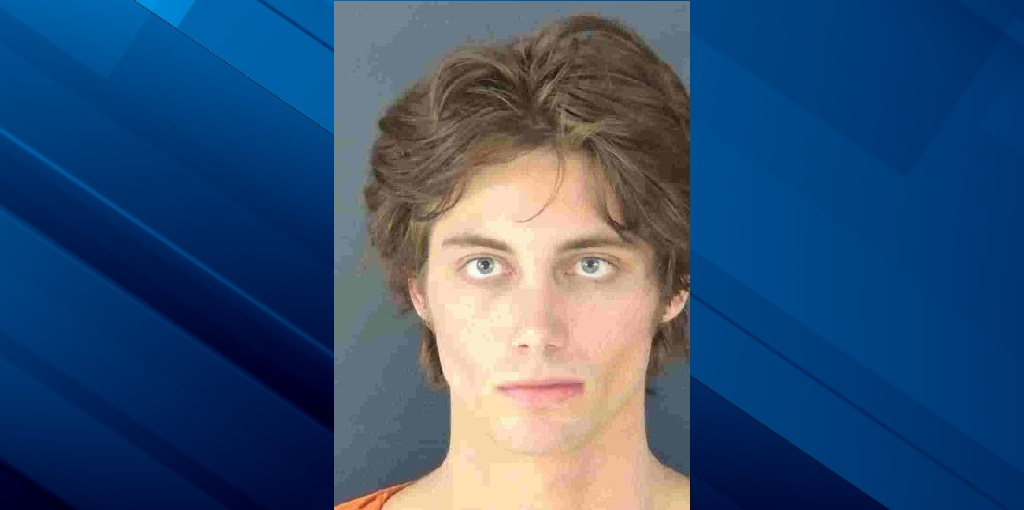
Reddit has long debated whether influencer fame functions as a kind of social armour. The case of Mason Hull suggests it does not.
Mason Hull, who goes by the TikTok handle “hullo,” was arrested on May 6 and faces 15 counts of possession of child sexual abuse material, according to the Sarasota County Sheriff’s Office. He was 18 years old at the time of arrest, a TikTok celebrity, not an anonymous online user.
According to a probable cause affidavit, Hull’s girlfriend discovered the material after looking through his phone while he was sleeping. She told deputies she also saw evidence of Hull receiving money for the sale of some images. When detectives went to his apartment, Hull agreed to be interviewed. He told deputies he had been using the Telegram app to view and pay for child pornography, and detectives seized his phone, finding images and videos of girls estimated to be between 6 and 10 years old.
Hull’s TikTok page became private shortly after his arrest was announced. He remains in the Sarasota County Jail as of the time of writing.
What this means: This is categorically the most serious criminal case on this list. The charges are federal in nature and carry significant mandatory minimums. The fact that Hull used a monetisation layer, allegedly selling images, elevates the severity considerably.
Source: mysuncoast
Case #2: Craig Long — The MAGA Influencer Caught in a Sex Sting
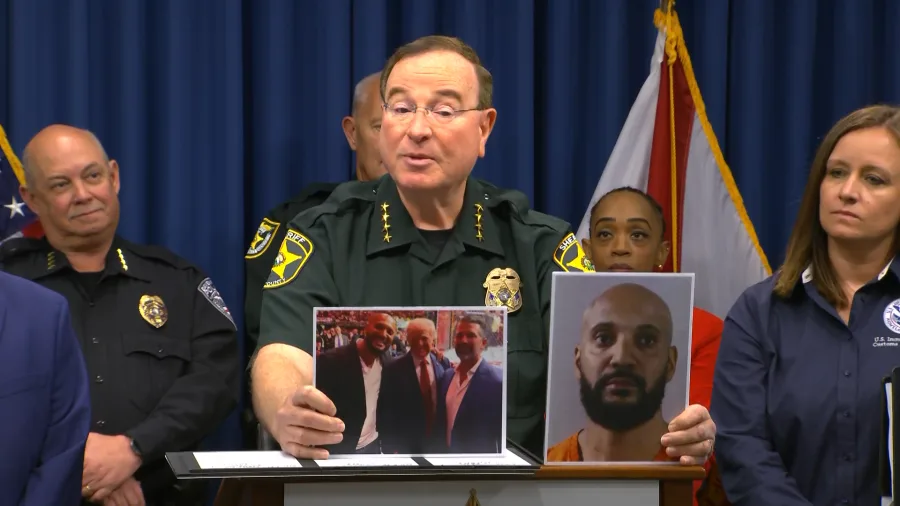
The most viral influencer arrest of 2026 was arguably Craig Long’s, not because the charge was the most serious, but because of who was standing next to him in a photograph.
A massive human trafficking and child predator sting in Polk County resulted in 266 arrests, including Long, a prominent social media influencer and fitness business owner. The operation was named “Polk Around and Find Out.”
Long is a self-described “MAGA influencer” with more than 500,000 followers on TikTok, more than 80,000 subscribers on YouTube, and ownership of a fitness company in Tampa. He was 41 at the time of arrest.
What made the press conference extraordinary was the theatre of it. Sheriff Grady Judd laughed at the press conference that the arrest would give Long “some content for his social media.” Police publicly highlighted Long’s large social media following, his past criminal record, and his proximity to high-profile political figures, including displaying a photo of Long standing beside Trump and Trump Jr. at a UFC fight in Miami on April 11, 2026.
Long had previously been sentenced to six months in prison for his role in the January 6 Capitol riot, but was released after Trump signed a blanket pardon for those who stormed the Capitol on his first day back in the White House.
The overall sting resulted in 439 new charges, 298 of which were felonies, against individuals who held a combined 1,028 prior criminal charges. Long is out on a $1,000 bond.
What this means: The Long case has reignited debate about how closely political figures vet the influencers they allow to photograph alongside them. It’s also a reminder that follower counts and “pro-law enforcement” branding offer zero immunity when law enforcement is running an undercover operation.
Source : Yahoo
Case #3: Clavicular (Braden Peters) — Two Arrests, One Very Bad Month
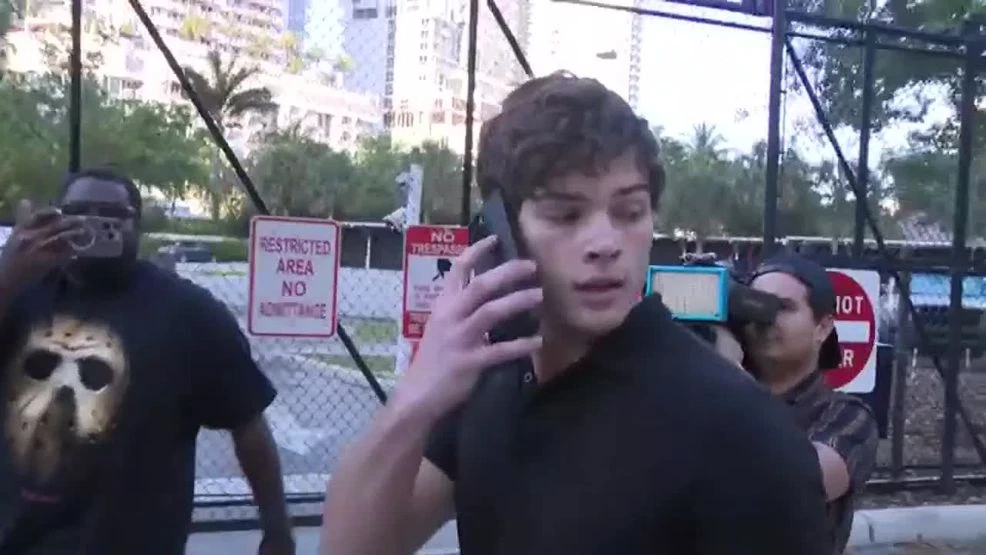
Clavicular, whose real name is Braden Eric Peters, is a popular streamer known for promoting “looksmaxxing” content, a movement focused on maximising physical appearance, sometimes through extreme or dangerous methods. He streams primarily on TikTok and Kick to a largely young male following.
His 2026 began badly and got worse. Peters was arrested in Fort Lauderdale on March 24 on charges of misdemeanor battery. Then, on March 26, he and two others, including an influencer known as “Cuban Tarzan”, were charged with discharge of a firearm in a public place in connection with an incident at the Francis S. Taylor Everglades Wildlife Management Area boat ramp dock.
The alligator incident had been livestreamed. Peters, Andrew Morales (22), and Yabdiel Anibal Cotto Torres (27) are accused of knowingly discharging a firearm in a public place. The charges were filed on April 29. Peters’ attorneys said the misdemeanor charge “stems from following the instructions of a licensed airboat guide” and that “no animals or people were harmed.”
The influencer had also sparked prior backlash for openly discussing drug use, including claims he used methamphetamines to suppress his appetite in order to maintain a lean physique.
What this means: The Clavicular case is a textbook study in how shock-content creators escalate. Each stunt requires the next to be more extreme — until the stunt is a crime. Livestreaming the incident also guaranteed there would be evidence.
Case #4: Adva Lavie (“Mia Ventura”) — The Dating App Burglar
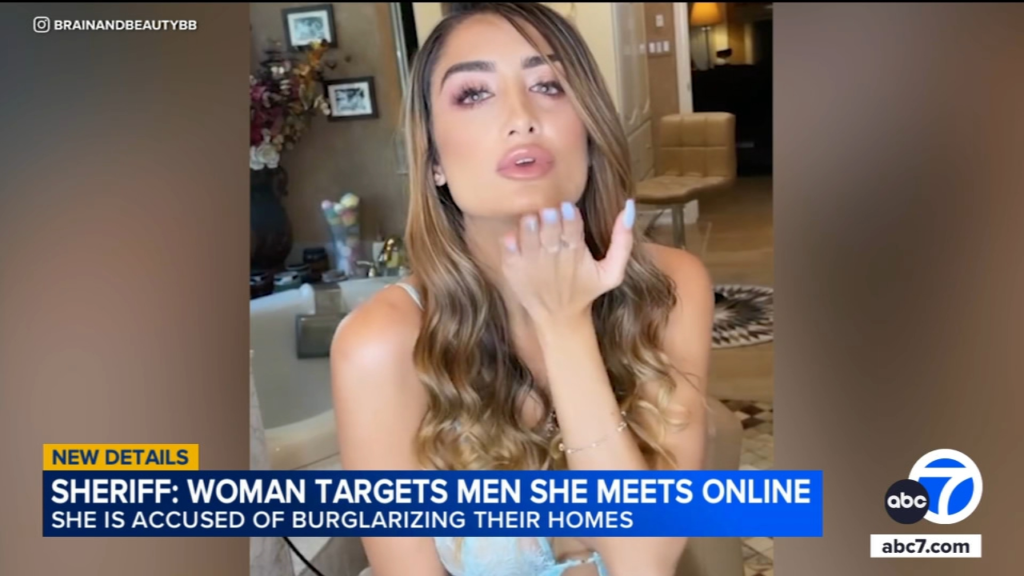
This case is different from the others: it’s about an influencer whose platform was the tool of the alleged crime, not just a backdrop to it.
Prosecutors allege that from 2023 to 2025, Lavie — known on social media as “Mia Ventura” — used dating apps and cultivated relationships to burglarize and steal from wealthy older men and younger women in Westlake Village, West Hollywood, Los Angeles, and Beverly Hills. She is accused of posing as a girlfriend and travel companion to gain access to victims’ homes and then stealing cash, gold, and high-end designer items.
She was held to answer on March 23 on two counts of unauthorized use of personal identifying information, two counts of grand theft, and two counts of first-degree residential burglary — all felonies. If convicted on all counts, Lavie faces up to 11 years and 8 months in state prison.
Los Angeles County District Attorney Nathan Hochman said the evidence would show the defendant “exploited trust built through online relationships to gain access to victims’ homes.”
What this means: The influencer’s currency is trust — followers trust their recommendations, their lifestyles, their personas. Lavie allegedly weaponised exactly that dynamic in real life. It’s a new category of crime that has no clean precedent: social-media-assisted burglary at scale.
Case #5: Jay Carnicom — When the “Predator Catcher” Becomes the Criminal
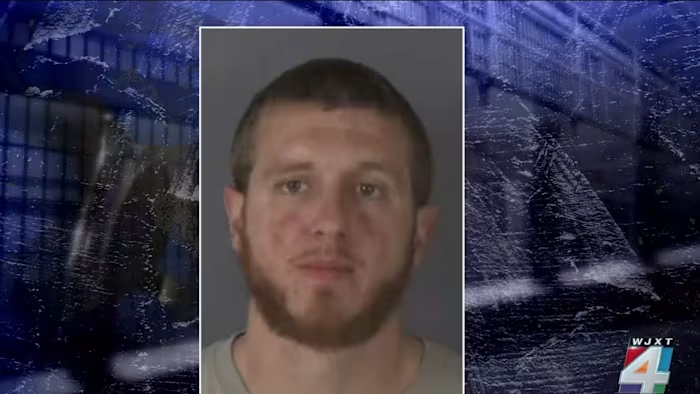
Perhaps the most ironic case of 2026. Jay Carnicom, who has tens of thousands of followers across social media platforms and describes himself as someone who “catches and exposes adults trying to prey on children,” was taken into custody in Clay County, Florida, on an extortion charge.
An arrest warrant alleges Carnicom attempted to compel a person to eat used cigarette butts while recording the encounter, threatening to involve law enforcement if the person did not comply.
Law enforcement took the opportunity to issue a broader warning. The Clay County Sheriff’s Office stated that adults posing as children online do not meet a criminal threshold and cannot be used by law enforcement as probable cause for an arrest when conducted by private citizens, and warned that vigilante-style confrontations may undermine efforts to prosecute crimes against children.
What this means: The “predator catcher” genre of content has become a significant niche on social media, monetised through outrage and confrontation. As this case shows, the line between vigilante justice and criminal coercion is thin and courts treat it as such.
Why Does This Keep Happening? The Reddit Question Finally Answered
Across Reddit’s true-crime and social media communities, one question comes up constantly: why do influencers keep getting arrested? The answers people get are usually vague. Here is the sourced version.
Studies show influencers report anxiety rates nearly 40% higher than traditional public figures, fuelled by burnout, public scrutiny, and the erosion of private life. The algorithmic pressure to remain “on” — to produce ever more compelling content — creates conditions that reward escalation. Each viral moment raises the stakes of the next one.
The influencer economy is estimated to reach $480 billion by 2027, and this ecosystem has spurred a subsequent increase in a completely new type of litigation and investigations. More money in the system means more temptation, more exposure, and more eyes on creators’ behaviour — including law enforcement’s.
There’s also a simpler answer: fame doesn’t change who someone is. It amplifies it. Craig Long had a prior criminal record before he became an influencer. Clavicular was escalating on-screen for months before his first arrest. Mason Hull was allegedly committing crimes on a private app while maintaining a public TikTok persona. The platform was the spotlight, not the cause.
The “Influencer Immunity” Myth: What Actually Happens After Arrest
Another question Reddit can never quite answer: do influencers actually face real consequences, or do they just rebrand and carry on?
The data from recent history suggests consequences are real but uneven. Dallas influencer Ashley Grayson was sentenced to 10 years in federal prison in October 2024 after being found guilty of hiring a friend to commit crimes against a business rival and others. Nigerian influencer Hushpuppi, with 2.5 million followers, received an 11-year federal sentence for money laundering. On the lighter end, Craig Long’s $1,000 bond and a misdemeanor charge suggests the legal system does calibrate to severity.
What always happens — regardless of legal outcome — is platform collapse. Mason Hull’s TikTok went private within hours of his arrest. Craig Long’s content is under scrutiny. Clavicular’s sponsors and platform deals are under review. Social media posts have also proven to be some of the most damaging evidence in court — used to establish charges, confirm personal information, and demonstrate a pattern of behaviour.
The influencer’s greatest asset — their public visibility — becomes their greatest liability the moment they are charged.
What Platforms Are Doing (and Not Doing)
The EU’s Digital Services Act and proposed US influencer transparency rules aim to mandate clearer brand disclosures, data privacy safeguards, and youth protection, while Twitter and Instagram have introduced tools to combat deepfakes and promote verified accounts, though enforcement remains uneven.
What platforms have not done is create any coherent policy for what happens to a monetised account when the account holder is arrested. TikTok, YouTube, and Instagram all have terms that allow account removal for criminal content — but the speed and consistency of enforcement varies wildly. Hull’s account went private (seemingly by himself or his management), not by platform action.
FAQ: Your Questions Answered
Are all of these people guilty?
No. These are charges and allegations. All defendants are presumed innocent unless and until convicted in a court of law. This article reports on the charges as filed by law enforcement.
Which case is the most serious?
By legal severity, Mason Hull’s 15 felony counts involving child sexual abuse material carry the most significant potential penalties under federal and state law.
Why are so many of these cases in Florida?
All five 2026 cases covered here either occurred in Florida or involve Florida-based individuals. Florida’s Sheriff Grady Judd in Polk County is known for high-profile, media-forward sting operations — the “Polk Around and Find Out” operation is the latest in a long series. Florida also has very active state-level child exploitation task forces.
Does social media fame make you more likely to get caught?
In several of these cases, yes. Clavicular livestreamed the alligator incident. Craig Long had a public, verified pro-law-enforcement persona that made his arrest newsworthy enough to feature in a press conference. High visibility works both ways.
What happens to brand deals after an arrest?
Brands typically terminate or suspend partnerships immediately upon arrest. The standard “morality clause” in influencer contracts allows brands to exit without financial penalty if the creator is involved in criminal proceedings.
Can an influencer’s follower count actually matter in court?
In the Craig Long case, the arresting sheriff specifically named Long’s follower count at the press conference — suggesting law enforcement viewed his public profile as relevant context, if not legally material. In civil proceedings, follower counts can speak to reach and financial value of a brand damaged by the crime.
What is “looksmaxxing” and why does it keep producing controversy?
Looksmaxxing is a movement focused on maximising physical appearance, sometimes through extreme or dangerous methods, that has drawn a largely young male following across TikTok and streaming platforms. Its creators monetise on shock value and extremity — a combination that has repeatedly crossed legal lines.
Will there be more influencer arrests in 2026?
Based on the pace of the first five months — six significant cases — the answer is almost certainly yes. Law enforcement agencies are increasingly aware that influencer profiles generate media coverage, which makes high-profile arrests a useful communications tool as well as a legal one.
Methodology and Data Transparency
This article was produced using live web research conducted in May 2026. All charges are drawn from official law enforcement press releases, court records, and regional news outlets covering the arrests at the time they occurred. No charges have been verified by conviction — all defendants are presumed innocent unless convicted. Follower counts cited reflect figures named by law enforcement at the time of arrest and may have changed since. The “40% higher anxiety rate” statistic is attributed to a Saint Augustine’s University analysis of influencer mental health research published February 2026. The $480 billion influencer economy figure is sourced from FTI Consulting’s 2026 analysis of the creator economy. Article last updated: May 8, 2026.
Published by WhyInfluencersGoneWild.co.uk — your source for influencer accountability, creator culture news, and the stories the algorithm doesn’t want you to see.
Alex Rivera is a content writer with a Bachelor’s degree in Journalism and Mass Communication and over two years of experience. He writes for Why Influencers Gone Wild, covering influencer culture, social media trends, viral stories, and the creator economy.