
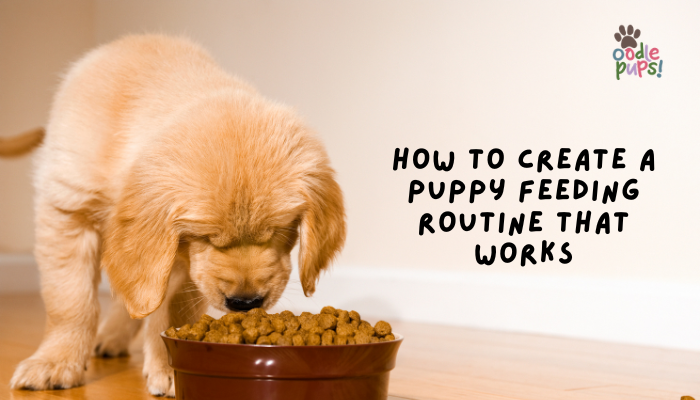
How to Create a Puppy Feeding Routine That Works
You can create a puppy feeding schedule by choosing suitable portions and adjusting the routine to your own meals. It’s one of the first things you’ll figure out when a new pup joins the family. If you can get it right, that’ll basically support everything else: toilet training, healthy weight, calmer behaviour.
We’ve raised Pip and Rosie at Oodle Pups on balanced diets suited to their needs. And that helped them maintain steady energy, healthy growth, and good digestion from the start.
So for new puppy owners with lots of food questions, we’ll share:
- How to build a feeding schedule that fits your life
- Reading your puppy food label correctly
- When to make the switch to adult food
Let’s start with understanding how puppy food differs from adult options.
Puppy Nutrition Is Different from Adult Dogs
Puppies need significantly more calories per kilogram of body weight than adult dogs due to rapid growth demands. Getting nutrient balance wrong during puppyhood can cause bone, joint, and developmental issues that affect dogs long-term.
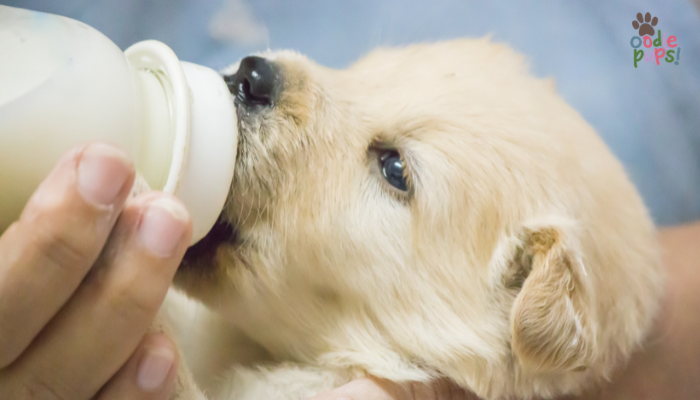
The window between 8 weeks and 12 months is worth watching closely with what goes into the food. Take a look at the details.
What Nutrients Does a Puppy Diet Need?
Puppy food isn’t just adult food in a smaller bag. Growing puppies need higher levels of protein and amino acids than adult dogs to fuel muscle development.
Along with that, essential nutrients like DHA (a vital omega-3 fatty acid) support brain and immune system function in those first few weeks after leaving their mother’s milk.
Calcium and phosphorus need to sit at a precise balance, too (and once growth plates close, there’s no undoing it). Too much or too little of either directly affects growing bones.
While raising Pip and Rosie, we’ve learned that a puppy diet labelled “complete and balanced for growth” covers that optimal balance without you having to work it out yourself.
What Type of Dog Food Should You Choose?
Puppy food that meets the Australian Standard AS 5812, governed by the Pet Food Industry Association of Australia, has undergone feeding trials (this means it’s been tested on growing bodies).
The right food format is important, too. For instance, dry food is easy to measure and highly digestible for most puppies. Meanwhile, wet food adds moisture and tends to suit fussier eaters.
Home-cooked food and raw diets can work as well. However, they require careful planning to include adequate vegetable matter and nutrient balance.
One thing to avoid is switching food suddenly after your puppy arrives in a new environment. Abrupt changes in those first few weeks can cause digestive upset and loose stools.
Why Does Your New Puppy Need a Feeding Routine?
A feeding routine gives your puppy’s body and brain something to work with. Scheduled meals regulate digestion, support toilet training, and reduce food anxiety. And it’s all because a puppy’s system runs better on predictability.
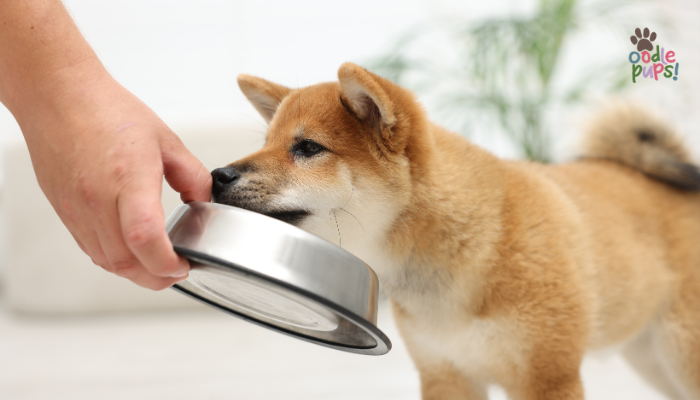
Here are the details you need to know:
- Steadier Blood Sugar: Puppies have small stomachs and fast metabolisms, so regular meals keep their energy levels steady throughout the day. When you go too long between feeds, that energy drops, while taking your puppy’s mood with it.
- Easier Potty Training: A puppy eats and then needs to go outside, typically within 15 to 30 minutes. Regular meal times help you predict those moments and reduce accidents.
- Simpler Weight Monitoring: Measured meals make it easy to spot if your puppy’s body condition is shifting up or down before it becomes a problem. Snacking all day, on the other hand, makes portion tracking nearly impossible.
- Builds Food-Time Trust: Puppies are far less likely to pick up bad habits like bowl guarding or inhaling their food whole. Not to mention, feeding at the same times each day reduces food anxiety and helps them feel more secure around meals.
- Creates Training Opportunities: Mealtime is a low-effort window for mental stimulation. Asking your puppy to sit before eating takes only a few seconds and helps build calm focus that lasts for months.
Feed puppies at random times, and you’ll feel the ripple effects across nearly every part of their day. It’s better to pick a schedule that fits your day and stick to it. The more predictable mealtimes are, the faster your puppy learns what to expect, and the easier the rest of the routine falls into place.
What Does a Good Puppy Feeding Schedule Look Like?
A puppy that eats four times a day at eight weeks should be down to two meals by six months. Meal frequency should decrease gradually as puppies age. That progression, along with a puppy feeding chart by age, may look like this:
| Age | Meals Per Day | Recommended Meal Times | Portion Per Meal | Approx. Daily Amount | Nutritional Focus |
| 6–12 weeks | 3–4 | 7 am / 12 pm / 5 pm / 8 pm | 0.4–0.75 cups | 1.5–3 cups | Brain, immune system, and bone development |
| 3–6 months | 3 | 7 am / 12 pm / 5 pm | 0.75–1 cup | 2.25–3 cups | Muscle growth, rapid development |
| 6–12 months | 2 | 7 am / 5 pm | 1–1.5 cups | 2–3 cups | Steady growth, weight management |
| 12+ months | 2 | 7 am / 5 pm | Adult portions | Transition to adult food | Maintenance, joint and coat health |
Cup amounts shown here are for dry kibble only and vary by brand, breed size, and individual body condition, so always check the bag first.
Large and giant breeds (think a Great Dane versus a cavoodle) grow at different rates. That’s why their food intake and meal timing may need to be set at three meals a day for longer.
Giant breed dogs, in particular, carry more risk from rapid weight gain. So, leaning on body condition rather than the number in the cup is a better way to track your puppy’s growth.
Measuring Body Condition Score
Body condition score is the most reliable measure of whether a puppy eats the right amount. To assess this, run your hands along their sides. You should feel ribs without pressing hard, with a light layer of body fat over the top.
After raising and placing multiple litters, we’ve found that anchoring meal times to your own morning and evening routine is what makes the puppy feeding schedule stick past week two. Additionally, a vet check every few months lets you adjust portions as your puppy’s weight and physical condition shift (and don’t forget fresh water alongside every meal).
Read the Puppy Feeding Guide Correctly
One of the most common questions new owners ask is “how much should I feed my puppy?” and the bag is usually the first place they look.
But feeding guides on packaging show daily totals, instead of per-meal amounts (across three meals a day, that compounds quickly without you noticing). So always divide the total by however many meals your puppy eats.
Most puppy food charts use projected adult weight as the reference point. You need to adjust portions every few weeks as your puppy grows. Keeping the same amount from 8 weeks to 6 months can upset both their food intake and body condition score.
A Well-Fed Puppy Is a Happy Puppy
The families we work with most often ask the same question once their puppy settles in: Are they feeding them the right way? It’s usually not about training but about making sure their puppy’s diet supports healthy growth.
A consistent feeding routine, age-appropriate food, and adjusted portion sizes are the three fundamentals that support your puppy’s health through their first year. Your puppy is a new family member, and what you put in their bowl today impacts their overall health for years ahead.
If this article helped you get clearer on your puppy’s diet and nutrients, there’s plenty more to read on the Oodle Pups blog. Head over and explore our other articles on puppy care, health, and raising a happy, well-rounded dog.

Alex Rivera is a content writer with a Bachelor’s degree in Journalism and Mass Communication and over two years of experience. He writes for Why Influencers Gone Wild, covering influencer culture, social media trends, viral stories, and the creator economy.