
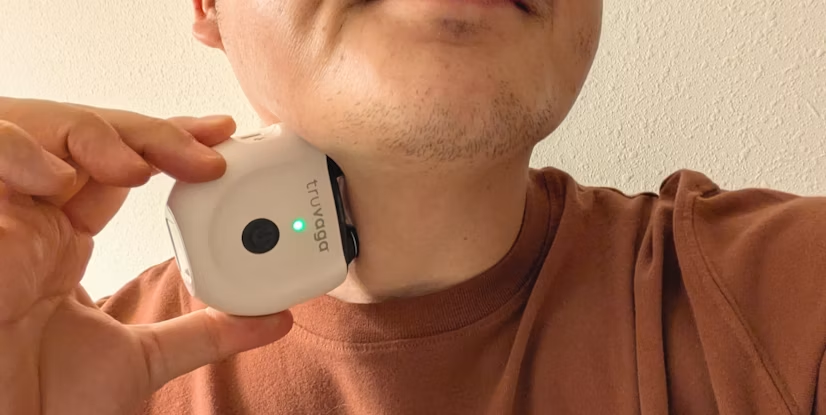
Portable Vagus Nerve Stimulator: Convenience Meets Health Benefits
A portable vagus nerve stimulator is a compact, non-invasive device that sends mild electrical pulses to the vagus nerve – the body’s longest cranial nerve – to help regulate stress responses, reduce anxiety, and support better sleep. Unlike older surgical implants, today’s handheld versions require no procedure and no prescription, making them accessible for daily, at-home use.
That said, not all devices are created equal, and the science is still catching up with the marketing. Here’s a grounded look at what these devices actually do, what real research shows, and whether one might be worth trying.
What Is the Vagus Nerve and Why Does It Matter?
The vagus nerve runs from the brainstem down through the neck, chest, and into the abdomen. It connects the brain to the heart, lungs, digestive tract, and immune system – acting as a two-way communication line between body and brain. When it’s functioning well, shifting between alertness and calm becomes noticeably easier.
The Vagus Nerve’s Role in the Nervous System
The vagus nerve anchors the parasympathetic nervous system – the “rest and digest” side of the autonomic system. When the sympathetic system dominates through stress or poor sleep, the body stays stuck in low-grade fight-or-flight. Vagus nerve activity counterbalances this, promoting relaxation, lowering heart rate, and easing digestion.
One key measure of vagal health is heart rate variability (HRV) – the variation in time between heartbeats. Higher HRV reflects a more adaptable nervous system, and several consumer devices specifically aim to improve it as a marker of autonomic balance.
How a Portable Vagus Nerve Stimulator Works
A portable vagus nerve stimulator delivers low-level electrical pulses to branches of the vagus nerve – most commonly through the ear (auricular stimulation) or the neck. The technical term is transcutaneous vagus nerve stimulation (tVNS).
Auricular devices target a vagal branch in the outer ear, which is why many resemble earphones. Neck-worn models stimulate the cervical vagus nerve through the skin. Both approaches avoid surgery entirely – the key distinction from older implanted devices used in clinical epilepsy and depression treatment.
What Happens Inside the Body During Stimulation
Electrical pulses travel from the vagus nerve upward into brainstem regions that govern mood, arousal, and autonomic regulation. This influences the release of norepinephrine and acetylcholine, affecting attention, heart rate, and inflammation, and connects to the nucleus tractus solitarius (NTS), which helps regulate many involuntary functions.
The stimulation doesn’t override the nervous system – it nudges it. Less like flipping a switch, more like tapping a tuning fork near a string.
As businesses invest more in workforce readiness, practical preparation tools are becoming just as important as degrees. Many students and job seekers now use targeted resources like a CDL Practice Test PDF to build confidence for licensing exams and entry-level assessments. It’s one more example of how academic prep and real-world business requirements are connecting in the digital world.
What the Research Actually Shows
The science on tVNS is promising but still developing, especially for consumer-grade devices.
A 2024 double-blind, randomized controlled trial in Frontiers in Integrative Neuroscience examined transcutaneous auricular vagus nerve stimulation (TAVNS) in university students. Researchers found measurable reductions in anxiety and decreased muscle hyperactivity in the jaw – connecting nervous system regulation with physical tension in a concrete way. The study concluded that TAVNS holds real potential as a non-pharmacological anxiety intervention. (Read the full study)
Broader reviews support similar findings in depression, PTSD, and chronic pain – though researchers note consumer devices may not replicate clinical calibration. As flagged by researchers at the University of Florida’s College of Public Health, leading with marketing before mechanism does a disservice to the field.
The research is real. The overpromising is also real. Both things are true.
Key Health Benefits Supported by Evidence
Based on published research, the most credible benefits associated with vagus nerve stimulation include:
- Reduced anxiety and stress: Multiple studies, including the 2024 Frontiers trial, show reduced anxiety scores after auricular VNS sessions.
- Improved sleep quality: A University of Florida study found preliminary evidence that tVNS may improve sleep in PTSD patients by calming systems linked to hyperarousal.
- Lower inflammation markers: Vagus nerve activation triggers an anti-inflammatory response through the cholinergic pathway, relevant to chronic inflammatory conditions.
- Better heart rate variability: Several devices have shown HRV improvements, reflecting stronger autonomic balance.
- Enhanced mood and focus: Auricular tVNS research in depression shows brain activity changes that parallel some effects of antidepressant treatment.\
| Benefit | Type of Evidence | Strength |
| Anxiety reduction | RCTs, controlled trials | Moderate–Strong |
| Sleep improvement | Pilot studies | Preliminary |
| Inflammation control | Animal + human data | Moderate |
| HRV improvement | Clinical + commercial device studies | Moderate |
| Depression support | Meta-analyses (taVNS) | Moderate |
VeRelief by Hoolest: A Closer Look at a Leading Hand-Held Vagus Nerve Stimulator
Among the growing number of consumer tVNS devices, the VeRelief line by Hoolest stands out as one of the more seriously engineered options available. Developed by Dr. Nick Hool – a biomedical engineer who built it after struggling with performance anxiety as a competitive golfer – VeRelief has one core goal: real nervous system relief without apps, wires, or complicated setup.
What Makes VeRelief Different
The VeRelief Prime – Hoolest’s flagship hand-held vagus nerve stimulator –is roughly the size of a computer mouse. A single electrode is positioned just below the ear on the neck, targeting the cervical vagus nerve and nearby auricular branches via direct electrical stimulation. This matters: vibration-based alternatives are far less likely to activate the vagal pathway in any clinically meaningful way.
What sets it apart:
- Five stimulation modes ranging from 8Hz (gentle, for sleep and wind-down) to 100Hz (targeted, for fast stress relief or focus) – a wider functional range than most competitors
- No app, no Bluetooth, no pairing – the device activates when the cap comes off, which is exactly what’s needed mid-panic or between meetings
- Proprietary gel tips built into the device, so no messy paste or skin prep
- IRB-approved, placebo-controlled research cited by Hoolest, including a pilot with PTSD and panic disorder patients and a real-world study with over 1,000 first responders
The VeRelief Prime is classified as an FDA general wellness device – no prescription required – and is priced around $199–$349 depending on the model, with a 60-day money-back guarantee. Hoolest also offers the VeRelief Pro, a noise-canceling headphone with built-in auricular stimulation for hands-free use during work or rest.
The honest caveat: VeRelief hasn’t been validated in large-scale independent clinical trials. Its cited research supports tVNS as a category, and internal studies show promising results – but independent replication would strengthen the case. For a consumer device, though, Hoolest’s transparency around stimulation parameters and commitment to real research put it ahead of most alternatives.
Who May Benefit Most
The profiles most likely to see meaningful benefit based on current evidence:
- Individuals managing chronic stress or generalized anxiety who prefer non-pharmaceutical options
- People with sleep difficulties are tied to nervous system dysregulation
- Those recovering from burnout or high-pressure careers are looking to rebuild autonomic balance
- People with inflammatory or digestive conditions linked to autonomic dysfunction
Anyone with cardiac conditions, implanted medical devices, or epilepsy should consult a physician before use – even with non-invasive devices.
Practical Tips for Daily Use
Consistency matters more than session intensity. A few habits that tend to produce better results:
- Use at the same time each day – morning or pre-sleep sessions are reliable starting points
- Combine stimulation with slow, controlled breathing to amplify the parasympathetic response
- Start short (10–15 minutes) and increase gradually if well-tolerated
- Track HRV over weeks, not days – changes are gradual and cumulative
- Avoid sessions immediately after intense exercise, when the sympathetic system is still elevated
Is a Portable Vagus Nerve Stimulator Worth It?
For people managing chronic stress, disrupted sleep, or mild anxiety who want a drug-free tool, a well-designed portable vagus nerve stimulator can be a practical addition to a daily wellness routine. The science behind non-invasive tVNS is growing, and devices like VeRelief by Hoolest make that technology more accessible than ever.
The gap between research and marketing claims is still real. The category has genuine merit – how much it works for you depends on the device, session consistency, and individual biology. Treat it as a tool, not a cure, and the odds of a worthwhile outcome improve considerably.
Those with existing health conditions should consult a physician first. Everyone else can approach this space with measured optimism, as long as they choose a device that’s transparent about its technology and backed by more than testimonials alone.
Frequently Asked Questions
How long does it take to notice results from a portable vagus nerve stimulator?
Subtle improvements in calm or sleep often appear within the first few weeks. Measurable HRV or anxiety changes in research settings typically show up after four to eight weeks of consistent use.
Can a hand-held vagus nerve stimulator replace medication for anxiety or depression?
No. These devices function best as supportive tools alongside existing treatment – not replacements. Always consult a healthcare provider before changing any prescribed care.
Is it safe to use a vagus nerve stimulator every day?
For most healthy adults, daily non-invasive use appears safe. Side effects are typically mild – skin irritation or brief dizziness – and tend to resolve quickly.
Do vagus nerve stimulators work for everyone?
Not necessarily. Results depend on baseline vagal tone, the condition being targeted, and the device. Consumer outcomes tend to be less consistent than those from clinically calibrated equipment.
What’s the difference between an implanted VNS and a portable device?
Implanted devices are surgically placed and FDA-approved for epilepsy and treatment-resistant depression. Portable options stimulate the nerve through the skin – no surgery, no prescription – though implanted devices have a longer clinical track record.